Artificial intelligence is finding its way into almost every corner of drug development, and mRNA is no exception. We now have AI-assisted sequence design, machine-learning models for lipid selection and platforms promising to reduce the number of experiments needed to identify a development candidate. Some of the results are genuinely impressive. Some involve computational methods that were doing useful work long before everything acquired an AI label. And some sit in that familiar territory between an encouraging research result and a technology that can reliably improve drug development.
Having spent a fair amount of time trying to persuade mRNA constructs and formulations to behave as expected, I’m interested in anything that makes the process more predictable. But when someone tells me their AI platform can identify the best mRNA or LNP, I have a fairly obvious question: best at what, exactly? It’s worth asking because there are now enough published examples to examine what these technologies can actually do. We can look at what was predicted, how it was tested and whether the results would help someone making development decisions. We can also ask a few awkward questions about the experiments that didn’t work.
We were optimising mRNA before AI became fashionable
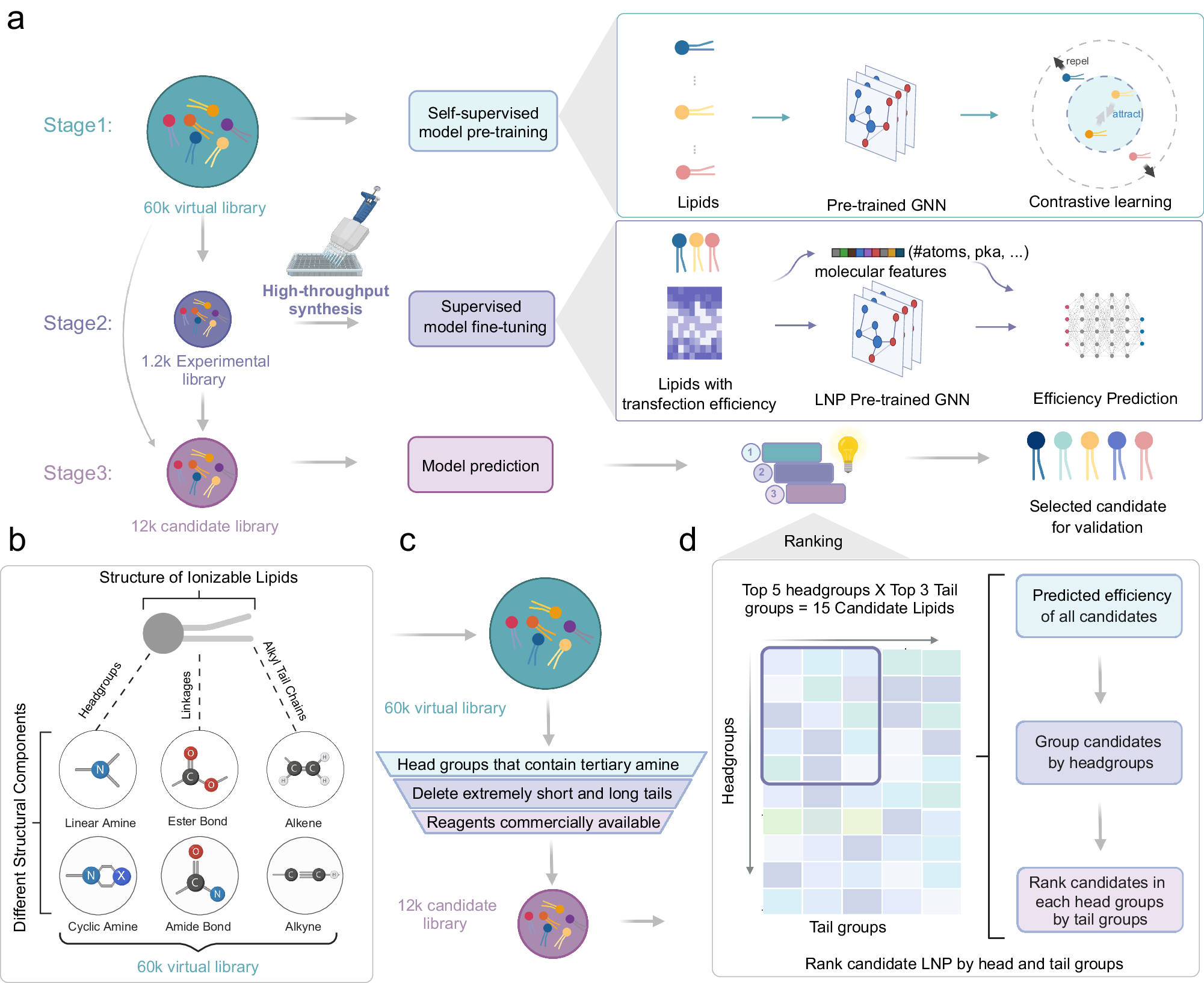
mRNA sequence design is an obvious target for computational optimisation. Multiple nucleotide sequences can encode the same protein, and the choice of synonymous codons can affect RNA structure, stability and translation. The number of possibilities is enormous, making an exhaustive experimental search impossible. A good example is LinearDesign, published in Nature in 2023 (Zhang et al., PMID: 37130545). Its algorithm simultaneously optimises codon usage and predicted RNA secondary structure, identifying sequences that would be difficult to find using conventional optimisation methods. The researchers demonstrated improvements in RNA stability and protein expression, with one COVID-19 vaccine comparison producing antibody titres up to 128 times higher than a codon-optimised benchmark in mice.
That’s an impressive result, although the 128-fold improvement came from a particular experimental comparison. It doesn’t mean the algorithm routinely produces improvements of that magnitude, or that those differences would translate directly into clinical performance. There’s another interesting detail: LinearDesign uses an elegant computational optimisation algorithm based on methods adapted from computational linguistics. It doesn’t depend on a machine-learning model trained to predict expression. Apparently, it’s still possible to achieve impressive results without calling everything AI.
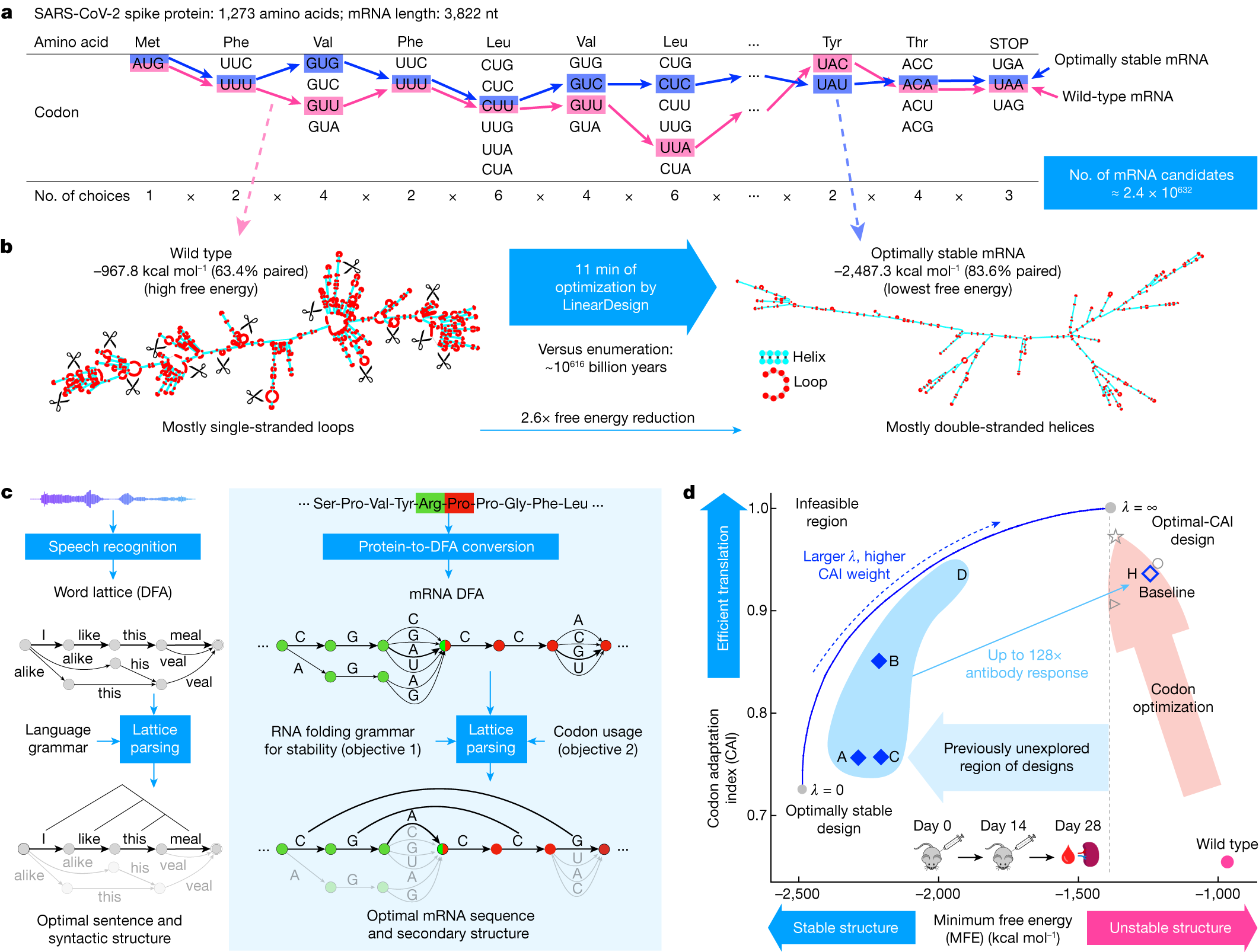
Another useful example is mRNAid, developed by researchers at Merck and published in NAR Genomics and Bioinformatics in 2024 (Vostrosablin et al., PMID: 38482061). mRNAid combines several established optimisation strategies, including codon usage, GC content, predicted secondary structure, uridine depletion and avoidance of unwanted sequence motifs. The researchers tested 20 optimised reporter mRNAs generated using five strategies. All showed higher expression than a deliberately poorly optimised starting sequence, with some performing comparably to, or better than, a commercial reference. Performance varied between optimisation strategies, however, which is a useful reminder that improving a computational property doesn’t guarantee the best biological outcome.
What I particularly like about mRNAid is that it’s accessible. The software is open source on GitHub, and there is a web interface for exploring different optimisation strategies. Developers can examine the methods rather than relying on claims about a proprietary black box. Both LinearDesign and mRNAid demonstrate the value of computational sequence design, and they provide a useful benchmark when evaluating commercial AI offerings. If a proprietary platform promises better sequences, it’s reasonable to ask how much better they are than sequences generated using established, accessible methods. Of course, even a very good sequence is only part of the product. For most therapeutic applications, it also needs to be delivered.
Machine learning starts earning its keep in lipid discovery
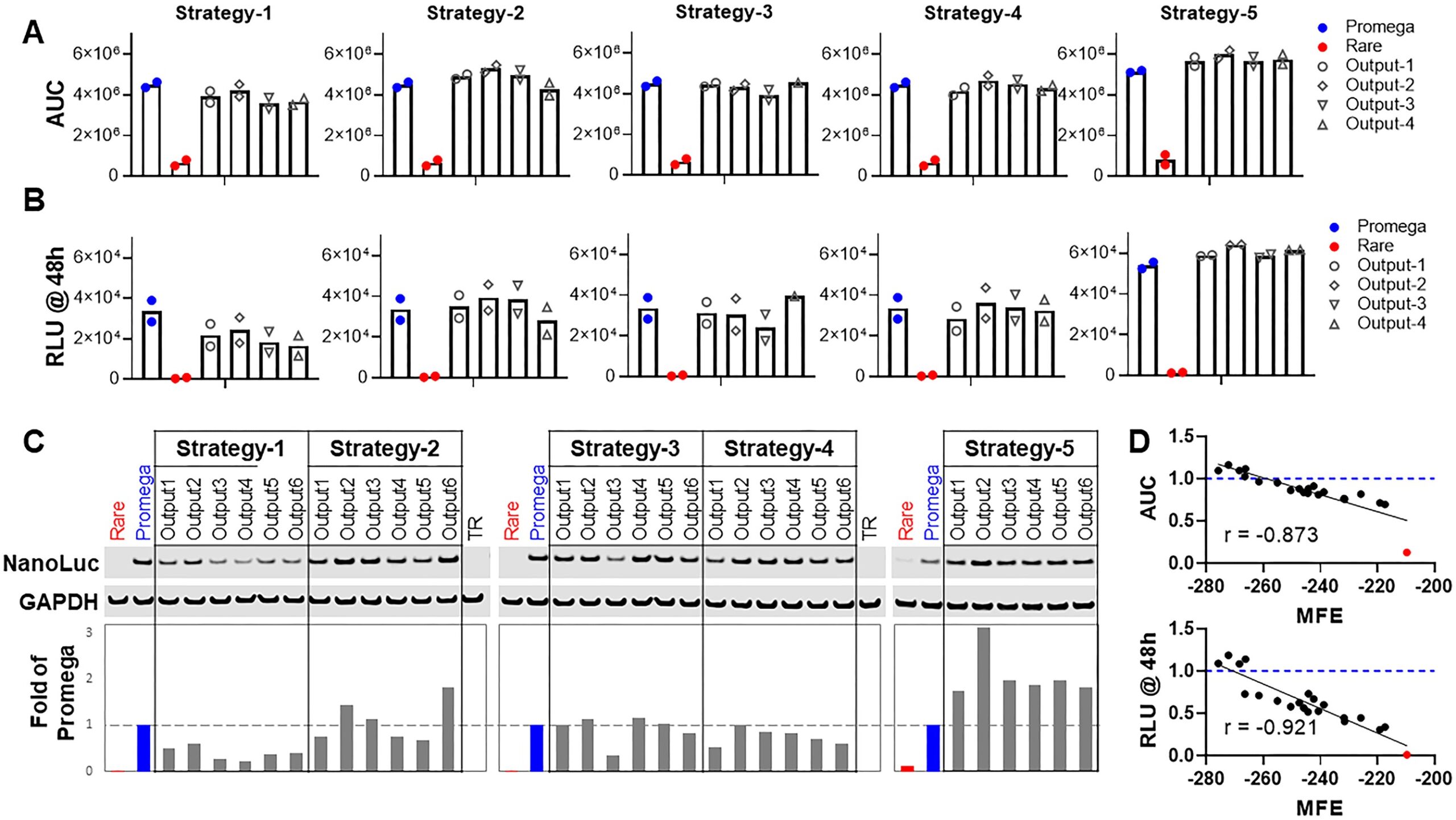
Lipid discovery is a particularly attractive application for machine learning. The number of possible ionisable lipid structures is enormous, synthesis and formulation screening are expensive, and the relationships between chemical structure and biological performance are complicated. In a 2024 Nature Materials paper, Li and colleagues combined machine learning with combinatorial chemistry (PMID: 38740955). They synthesised and screened 584 ionisable lipids, used the resulting transfection data to train machine-learning models, and then screened a virtual library of 40,000 additional structures. The 16 highest-ranked candidates were synthesised and tested experimentally, identifying lipid 119-23, which outperformed established benchmarks in several muscle and immune-cell transfection experiments. This is a convincing demonstration of what machine learning can contribute to discovery: a large chemical search space was narrowed to a manageable experimental set, producing a candidate with useful biological properties.
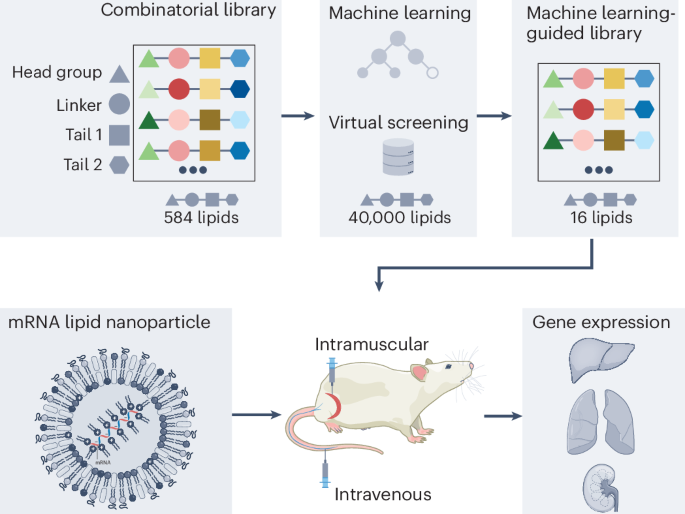
Another approach, AGILE, was published in Nature Communications in 2024 (Xu et al., PMID: 39060305). The platform combines deep learning and combinatorial chemistry to identify ionisable lipids for mRNA delivery. The researchers also investigated whether the model could be adapted to a different cell type, generating transfection data for 1,200 LNPs in a macrophage cell line and using those results to refine their model. Of 15 predicted candidates subsequently synthesised, 11 performed better than the benchmark lipid MC3 in that assay. Those numbers are encouraging and tell us rather more than simply reporting the best candidate. They also demonstrate that adapting a model to a new biological context requires additional experimental data.
There was another interesting observation in the AGILE study. Improvements in macrophage transfection did not automatically translate into better vaccine responses following intramuscular administration in mice. Anyone who has worked on delivery systems will recognise the problem. A lipid that performs well in one cell type may be relatively ineffective in another, and even excellent transfection doesn’t necessarily predict the pharmacological outcome we’re interested in. This is where the distinction between predicting an assay result and predicting something useful about a medicine starts to become important.
A recent example from Munich
A particularly interesting development is taking place at LMU Munich, where researchers associated with Olivia Merkel’s group are developing FormulAIte. The project received approximately €1 million in German EXIST funding in July 2026 to support the development and commercialisation of its RNA nanocarrier optimisation technology. Its ALINA platform combines machine learning with molecular dynamics simulations to guide the design of polymeric and lipid-based delivery systems. The objective is straightforward enough: predict promising carriers and reduce the amount of experimental screening required. Importantly, there is peer-reviewed research behind the approach, although FormulAIte itself is still a developing commercialisation project rather than a broadly validated commercial service. (LMU announcement)
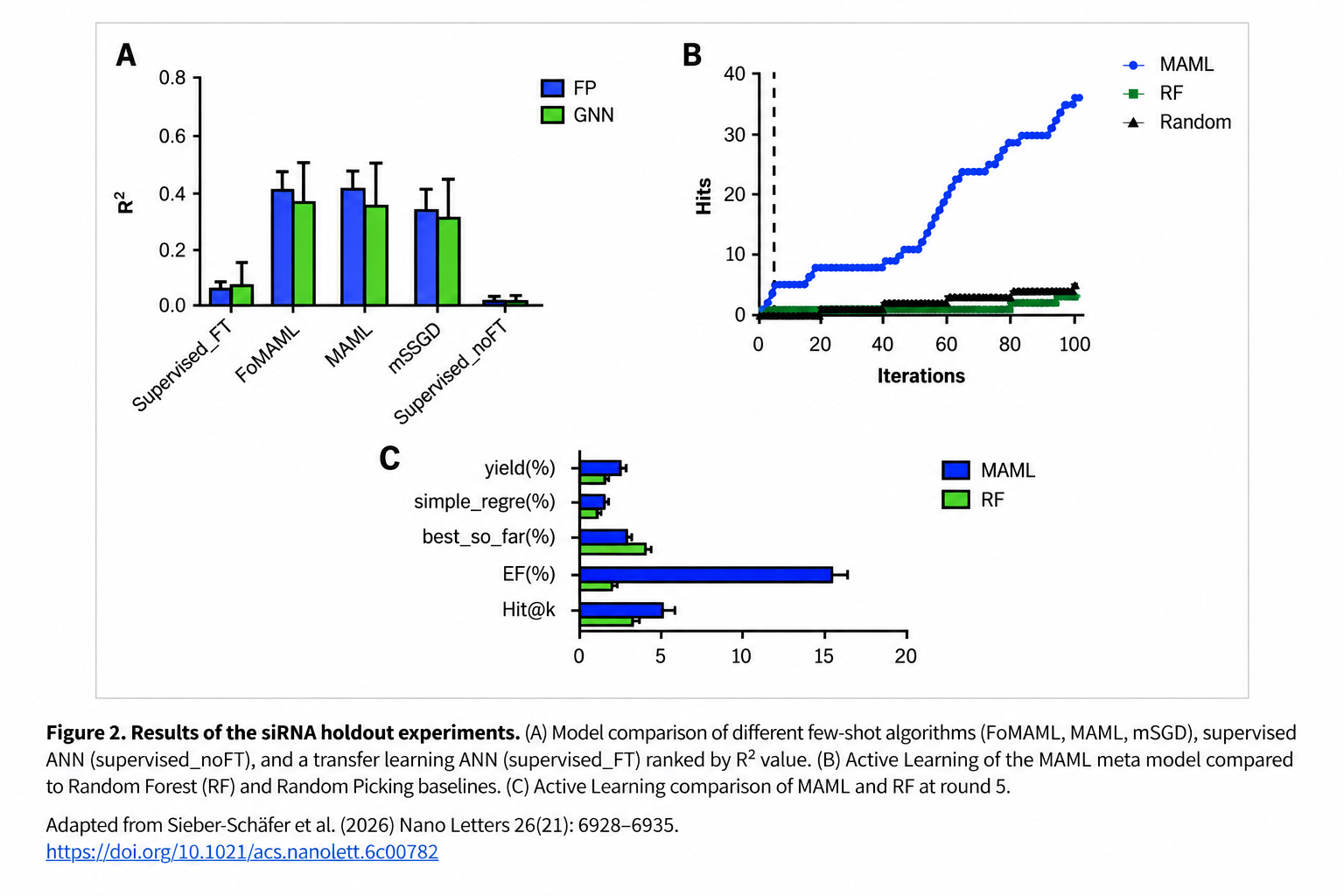
In a 2026 Nano Letters paper, researchers from the group investigated meta-learning for LNP optimisation (Sieber-Schäfer et al., DOI: 10.1021/acs.nanolett.6c00782). Meta-learning is intended to help models adapt to new problems using relatively little additional data, which is potentially valuable when experimental datasets are small and generated under different conditions. In a stringent extrapolation test, where siRNA data were excluded from model training, the best-performing method achieved an average R² of approximately 0.38, substantially outperforming conventional models that performed close to zero. The researchers also conducted experimental validation using 15 newly synthesised ionisable lipids across different cell lines and RNA cargos. An R² of 0.38 isn’t exactly a licence to stop doing experiments, but in a difficult extrapolation problem where the alternatives performed poorly, it suggests that the model had learned something transferable.
Another publication from the group is particularly relevant to our discussion, although this time the researchers were working with polymeric carriers for siRNA rather than mRNA-LNPs. In a 2026 paper in ACS Nano Medicine, they used machine learning to guide optimisation of poly(β-amino ester) delivery polymers (Sieber-Schäfer et al., DOI: 10.1021/acsnanomed.6c00078). A model-prioritised polymer showed improved gene knockdown and a more favourable toxicity profile in vitro compared with the previous lead. Unfortunately, the in vivo experiments revealed that the improvement did not translate reliably into animals. That may be one of the most informative findings in the paper. It demonstrates the potential of the modelling approach while exposing the limitations of the experimental system used to train it. And credit to the researchers for publishing the part where the biology declined to cooperate.
What happens when AI moves into commercial development?
Academic publications are useful because we can usually examine the experimental design, the comparison groups and at least some of the underlying results. Commercial platforms raise additional questions because their models and training datasets are often proprietary. One example is Inceptive, which is developing foundation models for designing therapeutic RNA sequences. In June 2026, the company reported that its models had generated mRNAs encoding chimeric antigen receptors with competitive biological performance despite limited prior CAR-T-specific training. A subsequent September report described five additional model-designed sequences tested in humanised mice. Three reportedly outperformed an optimised industry benchmark in B-cell depletion experiments, with the strongest candidate producing substantially greater CAR expression and depletion of CD19-positive B cells.
These are interesting results, particularly because all the sequences encoded the same CAR and were tested using the same targeted LNP formulation. That reduces the number of variables and allows a more direct comparison of sequence performance. However, these are company-reported findings rather than an independently peer-reviewed comparative study. The animal experiments involved four mice per group, with measurements taken 24 hours after administration. They provide evidence of early functional activity, but cannot establish longer-term persistence, durability of B-cell depletion or performance across a wider range of therapeutic constructs.
I’d also be interested in how the model performed across the complete sequence-design exercise. Five candidates were taken into animals, but how many were considered along the way, and how much experimental work and model refinement was needed to identify those five? Those questions aren’t peculiar to Inceptive. I’d ask them of any platform claiming to make candidate selection more predictable, particularly when the commercial proposition depends on reducing experimental work.
Nobody publishes negative data
There’s an old saying in science: nobody publishes negative data. It’s an exaggeration, but anyone who has spent time in a laboratory knows where it comes from. I touched on the importance of retaining unsuccessful experiments in an earlier article. Unlike most negative results, apparently the point is getting a second publication.
The same problem applies to AI-enabled mRNA development. We see publications describing successful predictions, improved sequences and better-performing lipids. What we rarely see is the complete record of what didn’t work. How many predictions were wrong? How many promising candidates failed when tested? How many rounds of optimisation were needed before the results were good enough to publish? Without those numbers, it’s difficult to judge how reliable these platforms really are. Finding one excellent candidate is an achievement, but if it took 500 attempts to get there, that’s rather useful information for anyone considering paying for the service.
To be fair, several of the studies discussed here provide considerably more detail than the typical technology announcement. The AGILE researchers report the performance of their 15 macrophage-screening candidates rather than presenting only the winner. The FormulAIte-associated polymer study describes the failure of improved in vitro performance to translate into an equivalent in vivo benefit. Those observations help establish the limitations of the methods, and they deserve as much attention as the successes.
A platform that produces one outstanding candidate from hundreds of attempts may be scientifically interesting and commercially valuable. But its economics are different from a platform that produces consistently useful candidates from a handful of experiments. For someone running a development programme, success rate affects budgets, timelines and the confidence with which decisions can be made. It also depends on what counts as success. Better expression than a deliberately weak control is one thing; consistent superiority over a credible benchmark, across independent experiments and relevant biological models, is quite another. An AI platform that reliably identifies a good candidate after five experiments might be more useful than one that occasionally identifies a spectacular candidate after several hundred. Unfortunately, the merely good candidate rarely makes the headline.
Predicting an assay result is only the beginning
The published examples show that computational optimisation and machine learning can help identify useful sequences, lipids and formulations. It’s unreasonable to expect a sequence-design algorithm to solve every problem associated with an mRNA drug product, or a lipid-discovery model to predict every biological consequence of using a particular formulation. The difficulty comes when success in a narrowly defined experimental system is used to support much broader claims about accelerating therapeutic development.
A sequence may express extremely well in cultured cells but behave differently after formulation. An LNP may perform impressively in a transfection assay yet distribute poorly to the intended tissue, produce excessive off-target expression or cause tolerability problems at the required dose. The relationship between protein expression and pharmacological activity can be equally complicated. For a vaccine, expression is several steps removed from the immune response. For a therapeutic protein, the location, duration and magnitude of expression can all influence efficacy and safety. Manufacturing introduces further variables, including formulation composition, mixing conditions, particle properties, RNA integrity and storage.
This is where the quality and structure of development data become particularly important. A model trained on experimental results can learn genuine relationships between product attributes and biological performance. It can also learn patterns arising from assay variability, batch effects and inconsistently recorded experimental conditions. AI is quite capable of learning our mistakes. It may even do so more efficiently than we do.
If formulation, process and assay information are poorly connected, a model may learn an unhelpful mixture of genuine product effects, process variation and experimental noise. More computing power won’t resolve the underlying ambiguity. The problem becomes particularly obvious when predictions are tested outside the conditions represented in the training data. A model that performs well on closely related sequences or formulations may struggle with a genuinely new cargo, lipid chemistry, cell type or administration route. That doesn’t make the model useless, but we need to understand where it works, where it doesn’t and how much new experimental information is required when we move into unfamiliar territory.
What would I ask before paying for an AI-enabled platform?
If I were evaluating an AI-enabled mRNA development service, I’d start with the simplest question: what exactly does the model predict? Is it predicting codon-related sequence properties, protein expression in a particular cell line, encapsulation efficiency, LNP transfection, biodistribution or a functional pharmacological endpoint? Each could be useful, but its relevance depends on the decision we’re trying to make. I’d then want to know how the predictions were validated. Were candidates selected prospectively, before their performance was known? Were test sequences or formulations genuinely independent of the training data? Did the model outperform credible conventional methods, or merely a weak baseline?
Then I’d ask about unsuccessful predictions. How many candidates were generated, how many were tested, and what proportion achieved predefined performance criteria? How variable were the results between experiments, and how did the model perform when it encountered unfamiliar sequences, formulations or biological conditions? I wouldn’t expect a commercial provider to reveal all its proprietary data or algorithms, but I would expect enough evidence to judge whether the claimed improvements are likely to be reproducible in my programme.
Finally, I’d want to understand how the model fits into the wider development process. A tool that reduces sequence-screening experiments may be valuable without improving formulation development. A model that selects lipids more efficiently may still leave significant work to establish biodistribution, tolerability, potency and manufacturing robustness. For a small biotech company, these distinctions influence whether it makes sense to use an accessible tool such as mRNAid, commission conventional optimisation work or engage a specialist AI provider. The relevant question is how much additional confidence, time or money the more sophisticated approach actually saves.
So, should we be using AI?
There is plenty of evidence that computational methods and machine learning can contribute to mRNA research and development. LinearDesign and mRNAid show what systematic sequence optimisation can achieve. The lipid-discovery studies demonstrate how models can narrow enormous chemical search spaces and identify candidates worth testing. FormulAIte is tackling the difficult problem of learning from limited and heterogeneous formulation data, while commercial developers such as Inceptive are beginning to demonstrate more ambitious applications in therapeutic sequence design. These are meaningful advances, and I expect they will become increasingly useful as better experimental datasets become available.
What I find less convincing is the idea that success in one assay automatically establishes the ability to accelerate an entire development programme. The journey from a computationally optimised sequence or formulation to a robust drug product still involves considerable biology, chemistry, manufacturing and, inevitably, experiments that don’t behave as predicted. For me, the value of an AI-enabled platform comes down to whether it helps us make better decisions. Can it eliminate weak candidates earlier, identify promising options more consistently, reduce unnecessary experiments and tell us when a prediction is unreliable?
Those are the results I’d like to see more of, alongside the impressive fold improvements and best-performing candidates. And I’d still like to know what happened to the experiments that didn’t make it into the presentation.